Project Overview
IMD Process partnered with a UK wine producer to modernise and fully automate its production and transfer operations. The objective was to increase throughput, improve product consistency, ensure hygienic compliance, and provide operators with complete process visibility and control—from tanker intake through to finished wine dispatch.
Engineering Scope
The turnkey solution encompassed:
-
Automated wine tanker unloading and transfer to storage vats
-
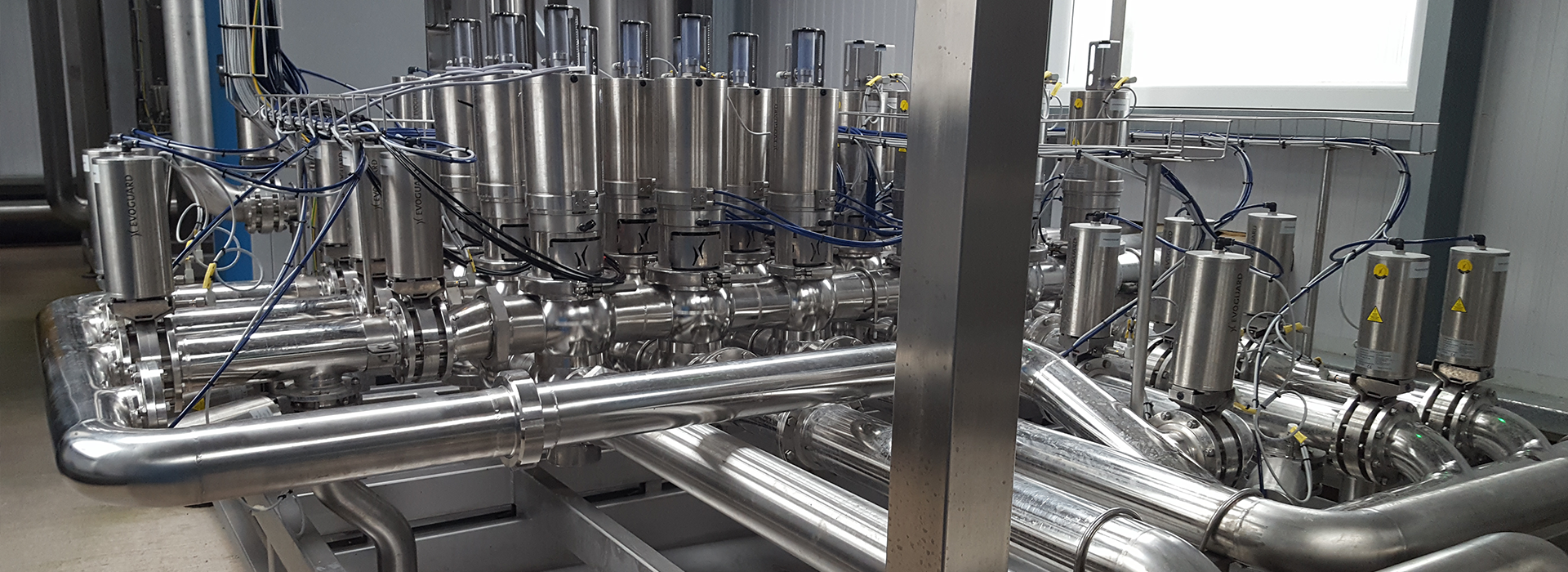
Fully automated valve matrix for flexible product routing between vats and processes
-
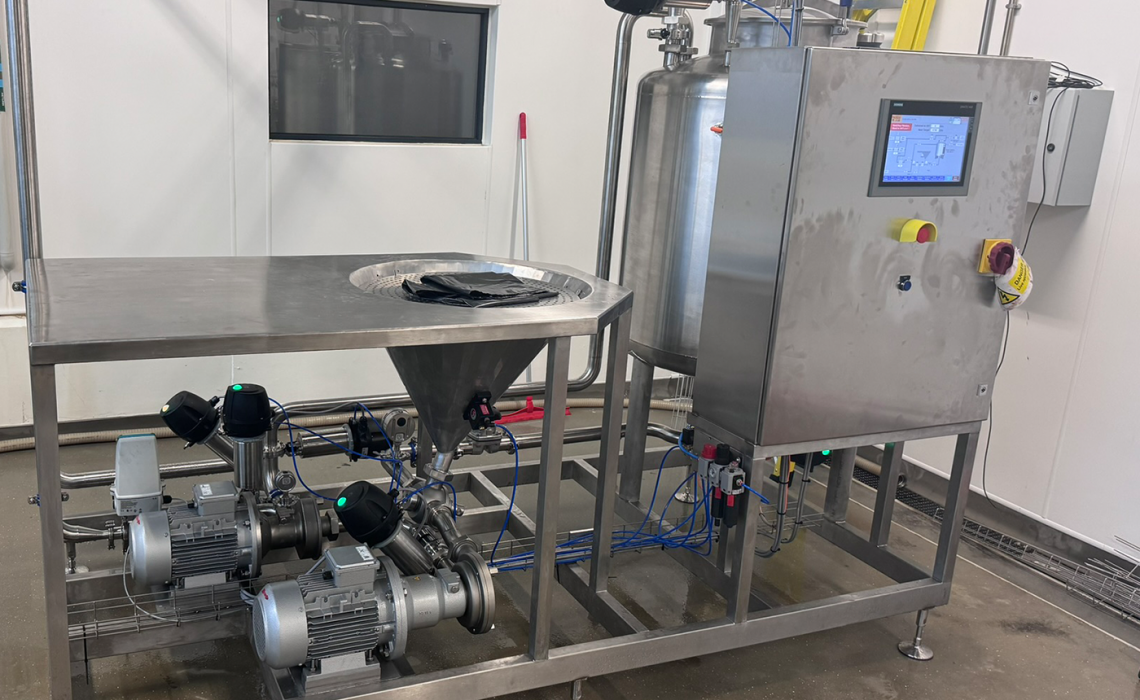
High-speed powder blending system for additives and corrections
-
Hygienic wine loading system for dispatch to bottling
-
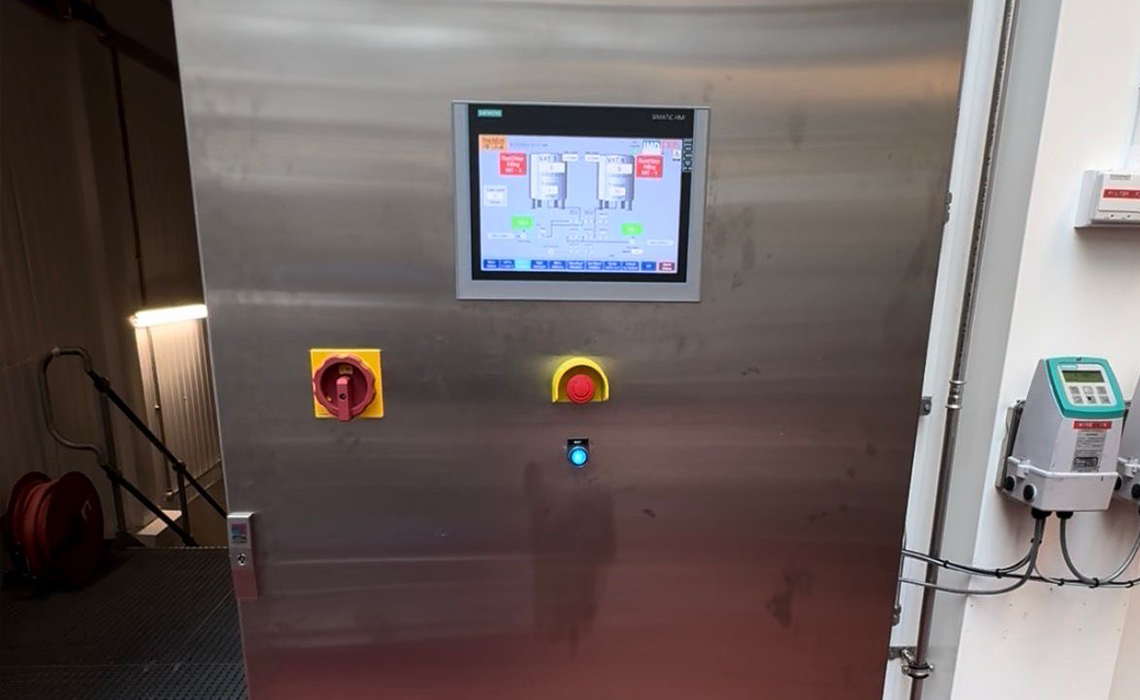
Centralised control architecture with touchscreen HMI
-
Instrumentation upgrades, including level, flow, and process monitoring systems
System Design & Instrumentation
1. Bulk Intake & Storage
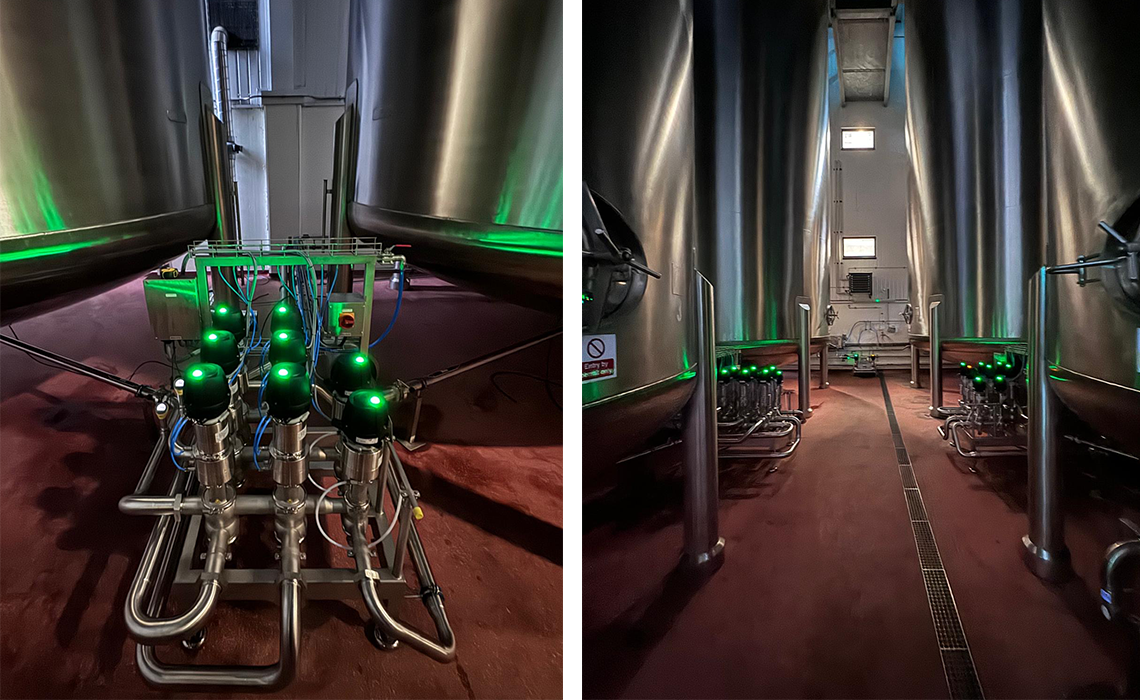
Wine is received via tanker and transferred using hygienic centrifugal pumps into stainless steel storage vats. Each of the ten vats is equipped with continuous level measurement (e.g., radar or guided-wave radar sensors), providing accurate, non-contact volume monitoring suitable for CIP environments. This enables real-time inventory tracking and prevents overfilling.
2. Automated Valve Matrix
A pneumatically actuated valve manifold forms the core of the transfer system. Designed to hygienic standards, the matrix enables automated routing of wine between vats, blending systems, and dispatch lines. Position feedback and interlocking logic ensure safe, contamination-free operation and eliminate cross-product risks.
3. Powder Blending System
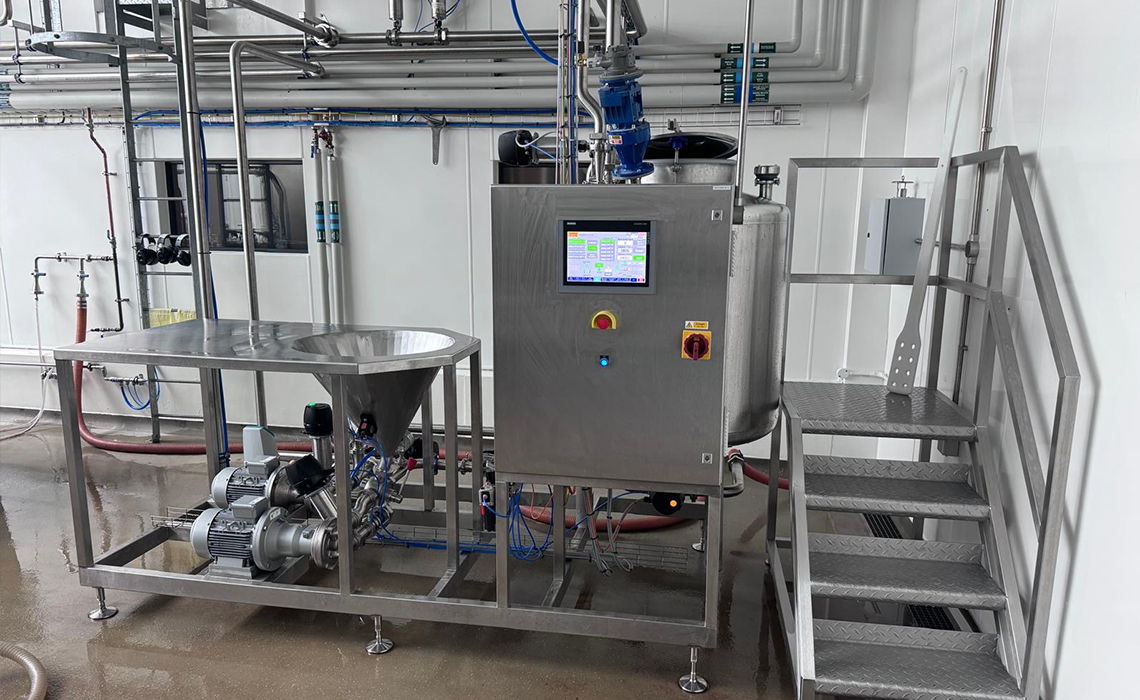
A dedicated high-efficiency blending skid was engineered to introduce and homogenise powdered additives. The system incorporates:
- Controlled dosing via screw or venturi induction
- Inline mixing with high-shear capability
- Recirculation loops for uniform dispersion
This reduced blending cycle times from approximately 4 hours to 12 minutes, while improving repeatability and reducing manual handling.
4. Finished Product Loading
The dispatch system uses hygienic pumps, inline filtration, and electromagnetic or mass flow meters for accurate transfer and batch accountability. The design ensures gentle handling of the wine, preserving product quality while maintaining precise volume control.
5. Control System & HMI
A central control panel integrates PLC-based automation with a touchscreen HMI. The system provides:
- Full process visualisation (tank levels, valve states, flow rates)
- Recipe-based control for blending and transfer sequences
- Alarm management and event logging
- Data capture for traceability and reporting
Compliance & Hygienic Design
The installation was engineered in line with recognised hygienic design principles, including:
- Use of stainless steel for all product-contact surfaces
- Sealed instrumentation suitable for washdown environments
- Compatibility with CIP (Clean-In-Place) regimes
- Sanitary valve design (seat valves or mixproof valves where required)
- Hygienic pipework with orbital welding and minimal dead legs
These measures ensure compliance with food and beverage industry standards, reduce contamination risk, and support consistent product quality.
Return on Investment (ROI)
The automation upgrade delivered measurable operational and financial benefits:
-
Blending Efficiency: Reduction in blending time from 4 hours to 12 minutes (>95% time saving), significantly increasing production capacity
-
Labor Reduction: Automation of transfer and blending processes reduced manual intervention and operator dependency
-
Improved Yield & Consistency: Precise dosing, controlled transfers, and reduced handling minimised product losses and variability
-
Downtime Reduction: Automated sequencing and centralised control reduced errors and changeover times
-
Traceability & Compliance: Integrated data logging supports quality assurance, audit readiness, and batch traceability
The combined impact results in faster throughput, lower operating costs, and improved overall equipment effectiveness (OEE).
Project Delivery
IMD Process delivered a full turnkey solution, including:
-
Process design and system engineering
-
Fabrication and assembly of skids and panels
-
Installation and integration with existing infrastructure
-
Software development and commissioning
-
Operator training and documentation
Outcome
The completed system provides the client with a fully automated, hygienic, and highly efficient wine processing facility. Operators now have complete control over intake, blending, storage, and dispatch from a single interface, enabling consistent delivery of finished wine ready for bottling with reduced cycle times and improved quality assurance.